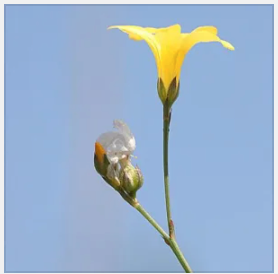
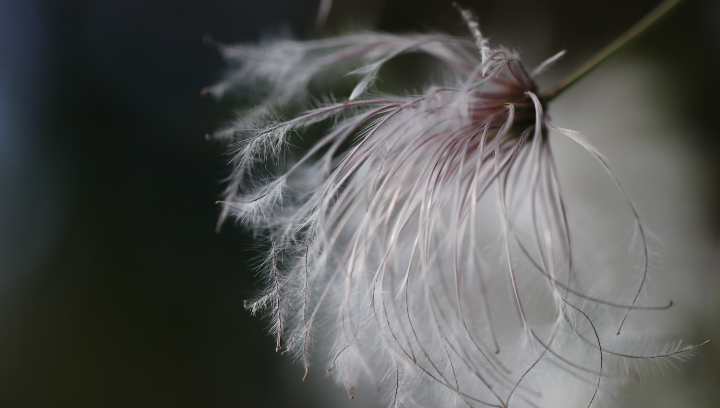
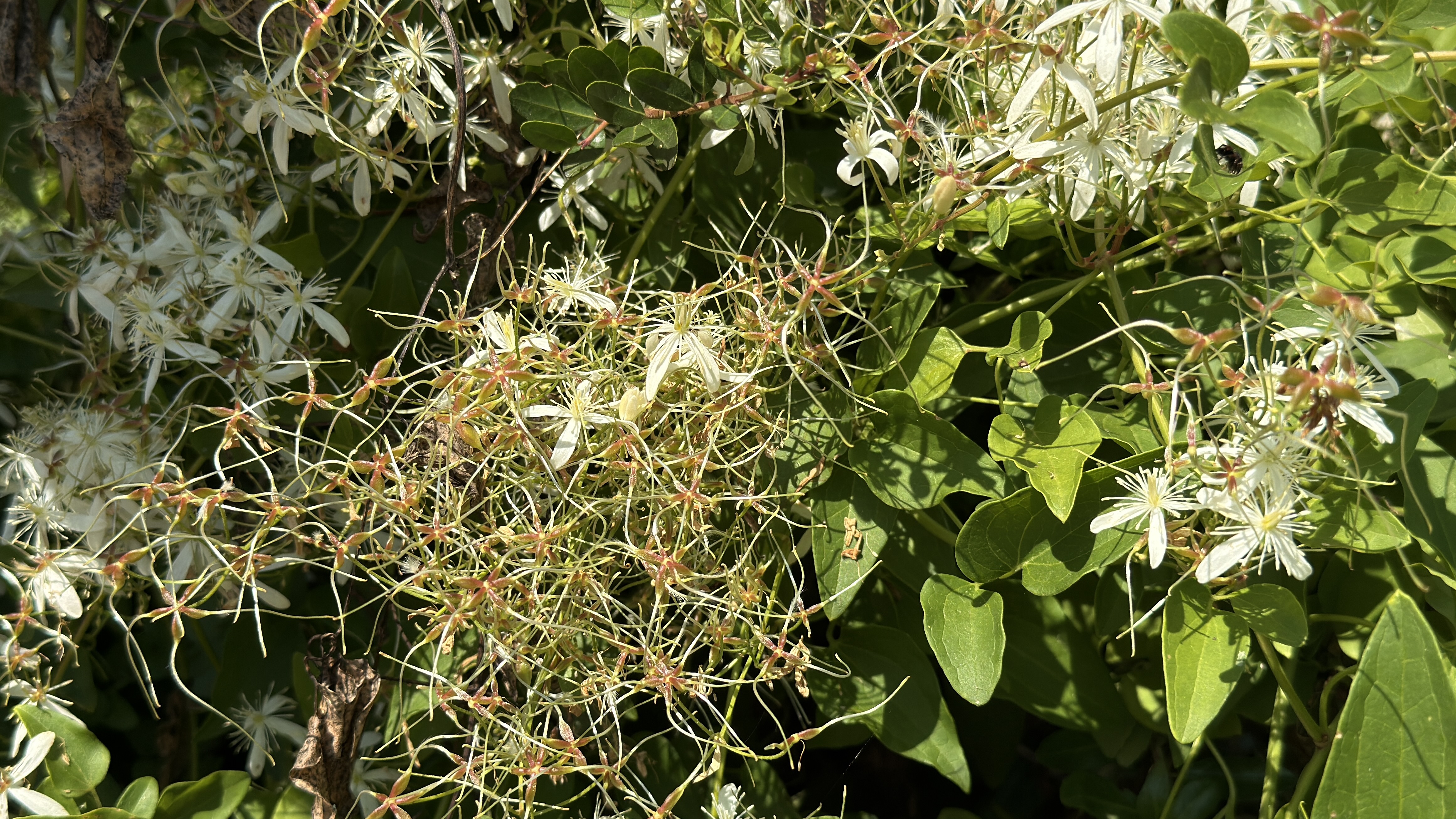
One of my favorite “flowers” is the female Clematis drummondii which is most noticeable in the late summer as the achenes turn into cascades of clouds that give it one of its common names, Old Man’s Beard. The actual flower is shown in the first photo following, the achenes in the other two:
Another favorite plant is Matelea reticulata, commonly known as Pearl Milkweed Vine, due to the “pearl” in the middle of its flower. It, too, is native to Central Texas, where I no longer reside, having “pulled up roots” to move a bit further to the North.
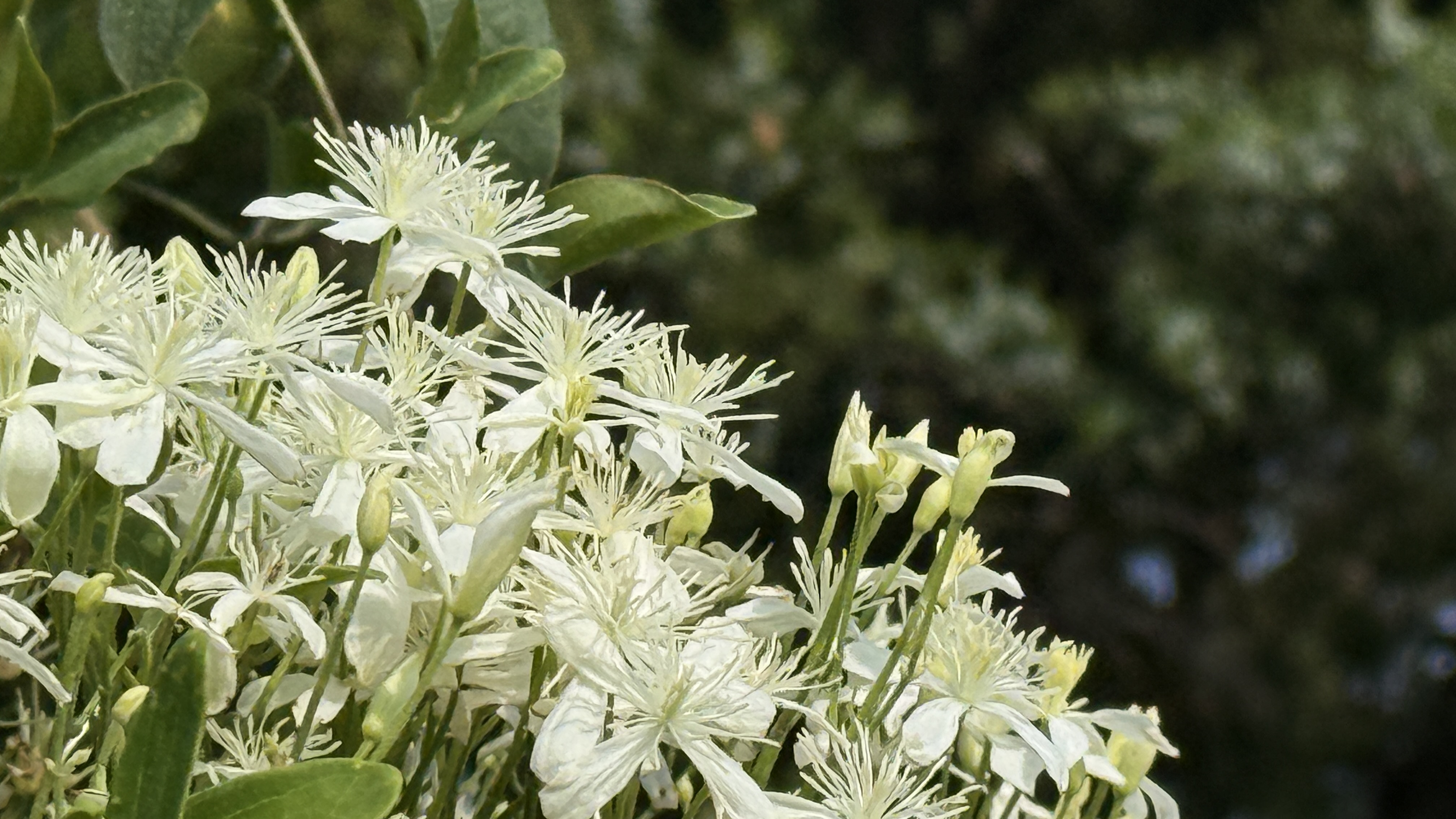
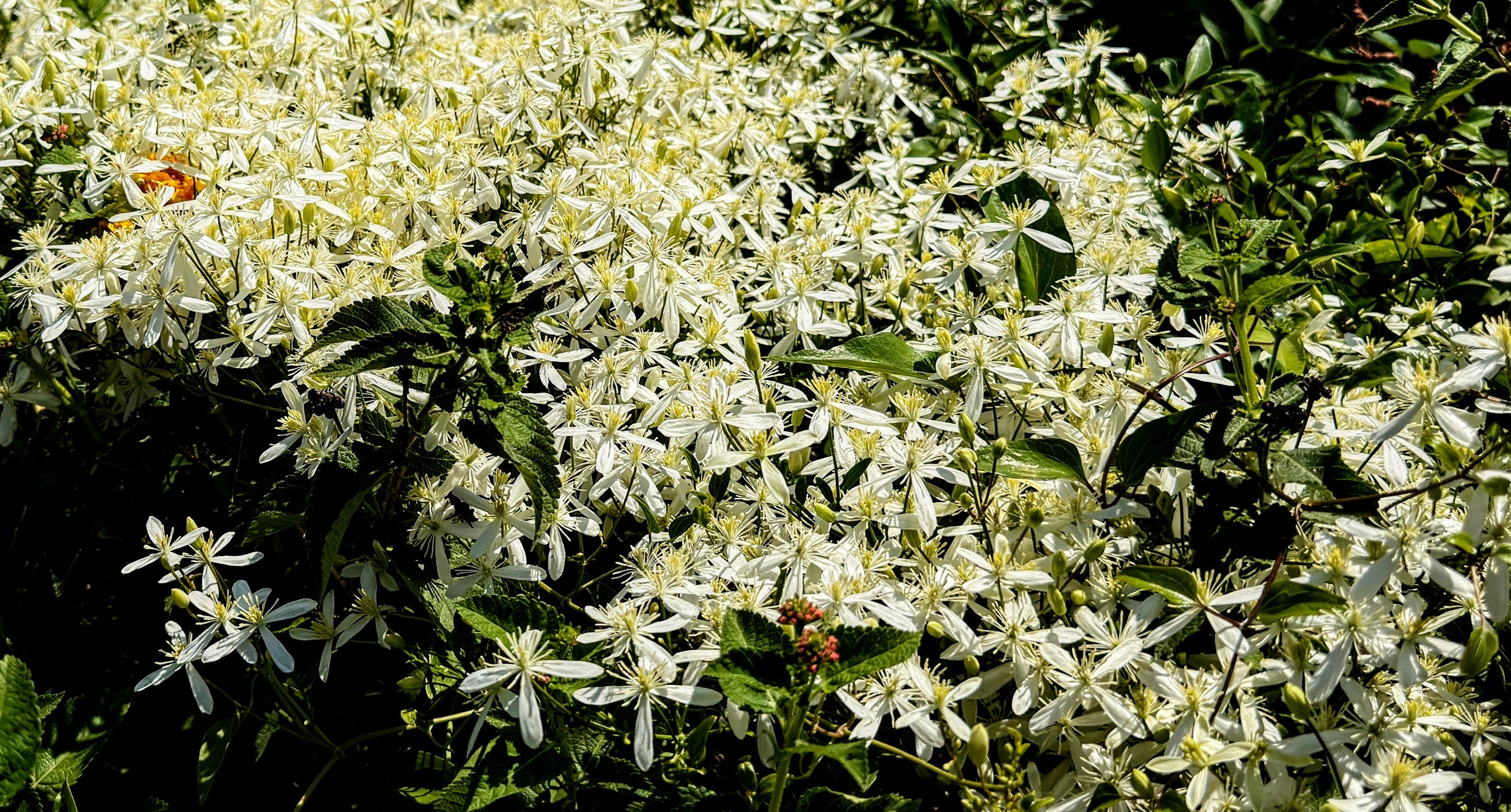
I was pleasantly surprised to find, recently, a different Clematis, native to Central Oklahoma. Clematis terniflora, or Autumn Clematis, as it’s commonly known, is smaller than its Texas cousin, but still provides striking clouds of white flowers and achenes along the roadsides and in ditches. In this case, the flowers provide the show, and the achenes are less showy than those of C. drummondii, as seen in the third photo following:
Cynanchum laeve, common name Honey Milkweed Vine, has been observed in several locations around here, notably near the airport and a few miles away. As suggested by the common name, the flowers give off a strong, sweet smell attractive to humans and pollinators alike.
While they’re not the same species one has become accustomed to, the “new” species are familiar enough to provide a sense of a welcoming environment.
A few photos from Bethel Acres in Central Oklahoma during. the Spring of 2025.
The first focuses on the long needles and early cones before they’ve matured. According to an Audubon Society Field Guide published in 1980, this species is native only to the Southeastern tip of Oklahoma. The Wildflower Center’s Native Plants database page, updated in 2022, repeats this information. The location where this photo was taken, of a tree distributed without human intervention, shows the effects of global warming in the extension of its range northward. (Assuming the species is identified correctly.)
LobLolly Pine (Pinus taeda)
Next is what appears to be a Post Oak, with a three lobed leaf shape. The leaves are about 5 to 8 inches long, but shape and size are highly variable.
Post Oak (Quercus stellata)
Blackjack Oak (Quercus marilandica)
Finally, here’s a Blackjack Oak, which has much larger catkins than the Post Oak. The two different species are known to hybridize easily. Perhaps we will post some photos in the future. Observed what appeared to be a Post and a Blackjack oak, growing next to each other, and each showing leaves resembling the “template” form for both pf the species. The typical Blackjack Oak leaf has a “duck foot” shape, almost triangular, without any deep indents. The Post Oak, on the other hand, has a “head” lobe with two deep indents above and below what look like “arms,” tapering a little into the form of a (vaguely) human body.
Non-Artificial Intelligence Summary: The author reveals that he was misdiagnosed with Parkinson’s Disease (PD) over 13 years ago, after initially seeking treatment for Essential Tremors (ET). The article concludes with a link to an open access article on Six Myths and Misconceptions about Essential Tremor.
_________________________
Over the summer of 2025, I’ve been undergoing review of my movement disorders, with a reduction in medications as well as no clinical observation of Parkinson’s Disease (PD) symptoms.
Some thirteen or so years ago, after a neurologist or nurse practitioner observed some slight rigidity, providing enough symptoms to make a clinical diagnosis, an old high school girlfriend called to express some concern and to wish me the best. Apparently, she was under the misconception that PD was equivalent to a slow death. Glad to say she must be mighty disappointed after all these years.
I had essential tremors (ET) from my teen years, in addition to several other prodromal conditions or symptoms relating to PD. In 2010 the ET had become somewhat disabling, and after many months of unsuccessful treatment for ET, I opted for Deep Brain Stimulation (DBS), which apparently had a great success rate with ET. However, in order to rule out PD, several months of tests were undergone, with the eventual three of four of the cardinal signs being observed. DBS was scheduled less than two months later. Seven years later, due to a lack of progressive neurological deterioration, a DAT Scan was ordered, with an interpretation that I apparently did have some form of parkinsonism. Apparently, the original diagnosis of PD was premature and made under the influence of confirmation bias. Or, to paraphrase Paul Simon, a person sees what they want to see and disregards the possibility of other underlying causes for a barely detectable symptom.
Finally, after moving to a different state and establishing care with a Movement Disorder Specialist, who conducted their own evaluation on and off PD medications, the original problem (ET) which brought me to a neurologist in 2010, was confirmed. The process of titrating off medications continues.
Naturally, I have been delving into the National Institutes of Health open access in order to learn more about what has been called “familial tremors” and “benign tremors” in the past.
One thing I have learned is the diagnosis of ET and PD can be difficult, due to many overlapping symptoms or conditions, they are linked genetically for some ET cases, and much of the material on PD doesn’t even investigate whether the two conditions are concurrent.
So another reason for me to go on living: educate and advocate for people who may or may not have a diagnosis appropriate to their condition.
Or rather, the same photo done in more ways than one…
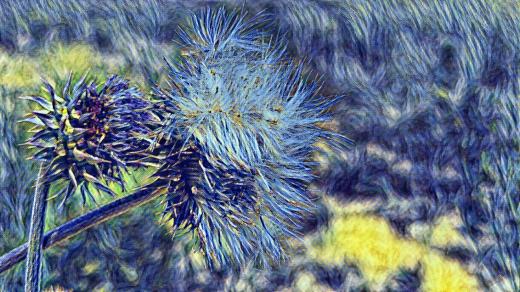
Musk Thistle (Carduus nutans) is an invasive plant native to Europe, Central Asia, and North Africa. In the photo above we see on the left a flower getting ready to bloom, and behind it a bloom already ggone to seed. The yellow in the background are either Coreopsis or Brown Eyed Susans, or both, out of the depth of field.
The second version was created using a “psychedelic” set of filters.
The third attempts to recreate Vincent Van Gogh’s general style – again, using software filters.
The third variation (and fourth version of the same photo), also uses a Van Gogh approach, this time using a filter that attempts to imitate his Starry Night painting.
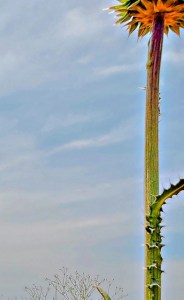
And finally, a “normal” shot accentuating the height of the stem as seen from below. If these photos have pricked your interest about Carduus nutans, you can click on the preceding link to check out the Wikipedia page for more information.
… or die trying. (Don’t know if that’s an actual quote, or if I just made it up.)
Actually, looks like I’m the author that specific quotation.
Ralph Waldo Emerson said “Knowledge is when you learn something new every day.Wisdom is when you let something go every day.” (at least that’s what Google search told me – kind of a “Jesus loves me, this I know, because the Bible tells me so” moment. Do I believe Google, or do I do further research to locate when and where he wrote or “said” the phrase, or do I I trust my source, and just let it go?
Letting things go, which I have a difficult time doing, is something I’ve had to learn, sometime as a new thing to learn, on a daily basis. One technique learned is to let go of an old book whenever a new book is brought into the house. Or so I claim. This has been difficult for a person who had at least 22 linear feet of of bookshelves, and only brought eight feet with him to Oklahoma.
And so it goes….
The following picture is a manipulated photo of sinus discharge, of which I have experienced more over the last week than I would wish on anyone during their lifetime.
I once had the pleasure (or punishment) of reading from Jacques Derrida’s “A Derrida Reader: Between the Blinds, ” a collection of essays and lectures translated from the original French while doing volunteer work with Vocal Eyes, a group at the University of Florida in. Gainesville Florida, which read various textbooks which were not available through Books on Tape, Recordings for the Blind, or other sources, in order to provide assistance to others who may have had impairments or disabilities, such as partial or full blindness, years of promotion through a coach’s pressure on academics instead of insisting they be taught to read at their grade level (for the sake of the young person and not for the sake of the coach’s desire to have a winning team – and if you think this is a run on sentence, you should definitely try reading this book, which can be found on the internet archive (but only available for vision impaired people), or can be found at various used bookstores for under $12.00.
The purpose of mentioning this somewhat dense and difficult to read book (although I must admit, by the time I had reached his discussion of Vincent Van Gogh’s painting of a pair of shoes, I had gotten into the rhythm of the lecture and had started reading with feeling, emotion, and meaning, which hopefully helped whoever was having to listen to this book as an assignment).
Nope, the reason for this lengthy prologue was to introduce a couple of photos, one from the book Van Gogh: The Complete Paintings, and the other, a photo of my own hiking boots, which had reminded me of the essay about. the boots, so I manipulated my photo to imitate (sort of) Van Gogh’s pair of shoes. Whose shoes Vincent had painted, I do not know. I actually had some shoelaces showing in the original picture of my shoes, but they were cut off during the cropping.
Vincent Van Gogh: Pair of Shoes / Bob Kamper: Hiking Boots
Kinda anti-climactic, no?
Oh well, I can always end the post with a song and a question:
As several of my Power for Parkinson’s instructors are fond of repeating “Motion is the Lotion.”
As late as 2018, the society for Movement Disorders (or International Parkinson’s and Movement Disorder Society, to be more exact) had stated that there was insufficient evidence that exercise had any effect on the progression of the disease or its symptoms. (The exact reference can be found in an earlier post in which I included a presentation with references to studies linking the effects of music and dance as the best of the best forms of exercise (it goes without saying, however, that the best exercise is the one that you yourself find and enjoyable and reinforcing, and will therefore actually continue to do).)(Although I just said it, in contradiction to the previous sentence.)(Come to think of it, I should update that presentation with more current citations…)
Which brings us up to 2025, just seven years later, in which a review article concludes that:
“These findings provide strong evidence that exercise, even light intensity, benefits general cognition, memory and executive function across all populations, reinforcing exercise as an essential, inclusive recommendation for optimising cognitive health.” (Singh B, Bennett H, Miatke A, et al, Effectiveness of exercise for improving cognition, memory and executive function: a systematic umbrella review and meta-meta-analysis, British Journal of Sports Medicine Published Online First: 06 March 2025. doi: 10.1136/bjsports-2024-108589
“Results 133 systematic reviews (2,724 RCTs and 258 279 participants) were included. Exercise significantly improved general cognition (SMD=0.42), memory (SMD=0.26) and executive function (SMD=0.24). Memory and executive function improvements from exercise were greater for children and adolescents than for adults and older adults. Those with attention-deficit/hyperactivity disorder exhibited greater improvement in executive function than other populations. Effects were generally larger for low- and moderate-intensity interventions. Shorter interventions (1–3 months) and exergames (video games that require physical movement) had the largest effects on general cognition and memory. Findings remained statistically significant after excluding reviews rated as low and critically low quality.” (Emphasis added)
In addition to several quotes from the lead author, Dr. Singh, the article mentioned Senior researcher Professor Carol Maher, who said exercise should be encouraged to boost cognitive health across all ages and fitness levels.
Cognitive decline and neurodegenerative disease are growing global health concerns, according to Professor Maher.
The review, which included over a quarter of a million subjects, presented compelling evidence that exercise should be integrated into health care and education settings to promote cognitive health.
Even small amounts of exercise can improve memory and brain function—especially for those at higher risk—means exercise should be included in clinical and public health guidelines.
You don’t maintain good cognitive health on a diet of hamburgers and diet soda, staying up late and sleeping until noon, one might conjecture. Riding around a golf course on a golf cart doesn’t exactly fit the description of the types of exercise reviewed in this study.
And, as fitting such an occasion, I’ll close out with a self-serving rendition of a “Parkinson’s Parody” of a song written by Christine McVie, originally. performed by Fleetwood Mac, and made even more famous by former President Bill Clinton’s campaign in the late 20th Century:
And where would we be without Occupational Therapists (OTs) and Physical Therapists (PTs)? Probably still in need of skillful psychiatrists. Which is a short way of saying that physical health and mental health are closely linked. “Fitness for Mind and Body,” as the slogan for Power for Parkinson’s succinctly says it.
Occupational therapy (OT) focuses on helping people with injuries, illnesses, or disabilities learn necessary skills while physical therapy (PT) focuses on improving mobility, strength, and flexibility after illnesses, trauma, or medical procedures.
Occupational therapists (OTs) assist patients with a wide range of day-to-day tasks such as eating, bathing, or getting dressed (and much more), regardless of the health condition, injury, or trauma that may have affected their skills.
Physical therapists (PTs) treat conditions, injuries, or trauma that cause reduced mobility, pain, and movement problems, helping patients reduce pain, regain strength, and increase flexibility after surgeries, trauma, or neurological conditions such as Parkinson’s disease. (bold emphasis added)
I had the privilege (?!) of receiving services from both OTs and PTs within the past few years, and can attest to the skills they have and how they can improve one’s enjoyment of the tasks Of Daily Living (ODL).
May you never need their services, but if you do… do it!
Much has been written on the positive impact that exposure to nature has on general well-being, physical, and mental health. And yet, it seems that developers have not gotten the message. Why, I do not know. Maybe they are not aware of the research on the health benefits of nature. If not, here is some material to share.
A website post and two reviews, from most recent to next (within past five years):
Attention: Our attention is a limited resource and it can become ‘fatigued’ throughout the day. Nature has been shown to restore attention and our ability to concentrate (Mason et al., 2022). Nature has also been found to reduce symptoms of Attention-Deficit/Hyperactivity Disorder (ADHD) (Faber Taylor & Kuo, 2009).
Mood: Nature improves mood and makes people feel happier (Neill et al., 2019). There is evidence that nature exposure can improve symptoms of depression (Berman et al, 2012).
Self-regulation: Nature helps us feel calmer and less irritable. This means that we are better able to control our impulses (Beute & de Kort, 2014; Weeland et al., 2019).
Stress: Nature reduces symptoms of anxiety, physical stress, and heart rate. It also helps us feel more relaxed (Shuda et al., 2020).
Social: Nature tends to increase generosity, cooperation, and our sense of social connection (Arbuthnott, 2023; Weinstein et al., 2009).
this review has documented the increasing body of evidence in support of [nature-based-interventions] NBIs as effective tools to improve mental, physical, and cognitive health outcomes, and highlighted key factors that improve engagement with the natural world. [bracketed explanation of acronym inserted from elsewhere in the article]. Emphasis added.
We assessed the strength of evidence from experimental and observational studies and found evidence for associations between exposure to nature and improved cognitive function, brain activity, blood pressure, mental health, physical activity, and sleep. Evidence from experimental studies suggested protective effects of exposure to natural environments on mental health outcomes and cognitive function. Cross-sectional observational studies provide evidence of positive associations between exposure to nature, higher levels of physical activity and lower levels of cardiovascular disease. Longitudinal observational studies are starting to assess the long-term effects of exposure to nature on depression, anxiety, cognitive function, and chronic disease. Limitations and gaps in studies of nature exposure and health include inconsistent measures of exposure to nature, knowledge of the impacts of the type and quality of green space, and the health effects of the duration and frequency of exposure among different populations (e.g., adults, children, historically marginalized).
Reminds me of John Sebastian’s tune, Daydream. And also that I should take a walk outside about now…
It’s been said that if you’ve met one person with Parkinson’s Disease (PD), then you’ve met one person with PD.
Today I saw a news segment about a guy who plays trombone, and how he had experienced a deterioration in his ability to play in the previous year. He was diagnosed with Essential Tremors (ET), also known as familial tremors or benign tremors. The point of the story was that he had opted for Deep Brain Stimulation (DBS), during which the patient is awake (at least part of the time), and that he played trombone during the operation.
I hope his physician got the diagnosis correct. As noted earlier in this blog, et-pd-is-there-is-or-is-there-aint-a-connection, a research paper was published that established a link between ET and PD: “LINGO1 rs9652490 is associated with essential tremor and Parkinson disease.” Having had essential tremors since my teenage years, I checked my DNA analysis and discovered that I did have that specific variation on the LINGO1 gene. As I’ve often remarked about PD research, this would have been good information to know 50 years ago.
I did remark a couple of times to my Movement Disorders Specialist’s team that I regretted not having asked to play the saxophone or guitar during my own DBS operation. To their credit, they attempted to fine tune my settings, but either due to lack of practice or progression of PD symptoms, I was not able to recover the picking and strumming skills I had back in 1997. And so it goes.
These days, I try to play on my keyboard as often as I can, but any attempt to follow an instructional program, or parse out simple pieces written for instruction (e.g., Bach’s selections from the notebook for Anna Magdalena, Bela Bartok’s pieces for children), soon devolve into loose jams on simple chord progressions, or attempts to recall, remember, and play some of my own simple songs with a minimum of egregious errors.
But I have promises to keep and chores to do before I sleep, so I will just end this with a selection from 1997, when I could play a little bit (self-taught). Unlike many of my songs, this one was not influenced by Bob Dylan.










 bob's brain: living well with a movement disorder and other comorbidities